Focus in seconds, build habits that last.
Habit.fm acts as a physical instrument for your mind: sync device gyro sensors, auditory frequencies, and line art into perfect symmetry. Catalog your daily entry points in an intuitive habit room.
Align. Tune. Carry.
01. Align
Sync hand and eye
Tilt your phone to lock the two vector axes into symmetry. The physical alignment forces working memory to clear prior distractions.
02. Tune
The frequency you chose
As the crosshairs meet, Tune starts — a noise bed or a binaural beat. Attention shifts without a pep talk.
03. Carry
The mental afterglow
Stay with the frequency. The visual geometry stays primed in the front of your brain while you work.
Tune. Habit. Track.
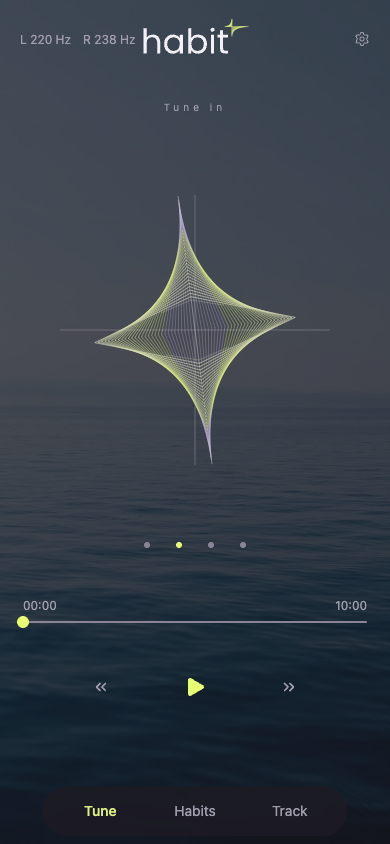
Tune
Spin until the lines complete. The sound stays while you work.
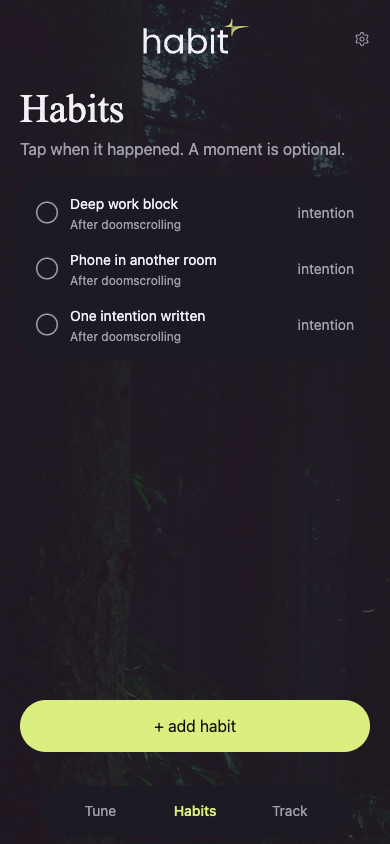
Habit
Name it, pick a moment, notice when it happened. No streaks.
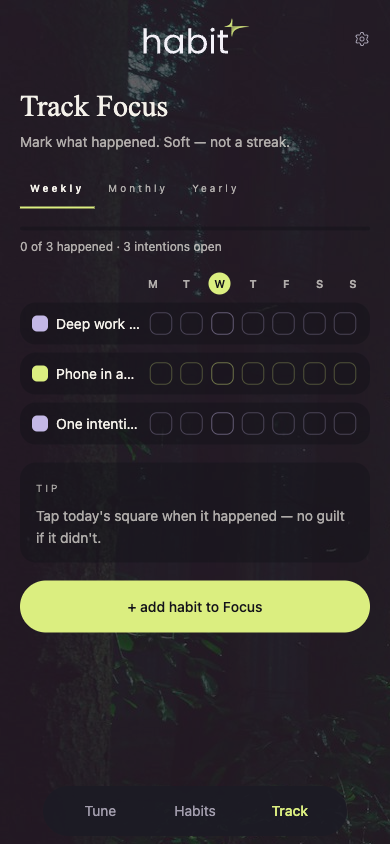
Track
Weekly, monthly, yearly marks. Soft happened — not a scoreboard.
Lock in. The frequency stays.
When you tilt your phone to align the vector mesh, your motor cortex, eyes, and auditory system lock onto a single point of symmetry. The geometric shape remains active in visual working memory while you work. It is a quiet benchmark in the front of your brain, stopping the mind from drifting back to distractions.
Focus in seconds, build habits that last — a frequency you can keep on while you write, review, or think.
Get the app
iPhone first, by invitation. Reply comes from a person.
Questions
Which phones?
iPhone first, by invitation. Android later. Headphones for the 40 Hz beat.
Where does my data live?
On your phone. Anything synced is encrypted, and we'll say so plainly before it happens.
Do I need Tune, Habits, and Track?
No. Tune is the start — a few seconds to lock, then stay with the frequency. Habits you pick stay. Track is optional noticing.
Is there a streak?
No. A broken chain doesn't motivate — it makes people quit to stop feeling it. Marks show a pattern, not a wound.
Does it sell me anything?
Not in the app. Habit.fm doesn't want anything from you.